01Owned storefronts beat rented shelves
Marketplaces are convenient and they know it: they take their cut, own the customer relationship, and put a competitor's listing two pixels from yours. A direct-to-consumer storefront is the alternative: your brand, your margins, your customer data, your rules. But owning the shelf means owning everything the marketplace used to handle (merchandising, pricing, imaging, checkout, shipping logic) and most DTC builds fail because they treat those as afterthoughts.
We build storefronts as businesses first and websites second. That means the questions get answered in the right order: what is the catalog architecture, what is the price ladder, what cart value does free shipping need to protect, and how does a first-time visitor from a social ad get to checkout in under a minute. Design serves those answers, never the other way around.
02Proof: SL_RS, our own store
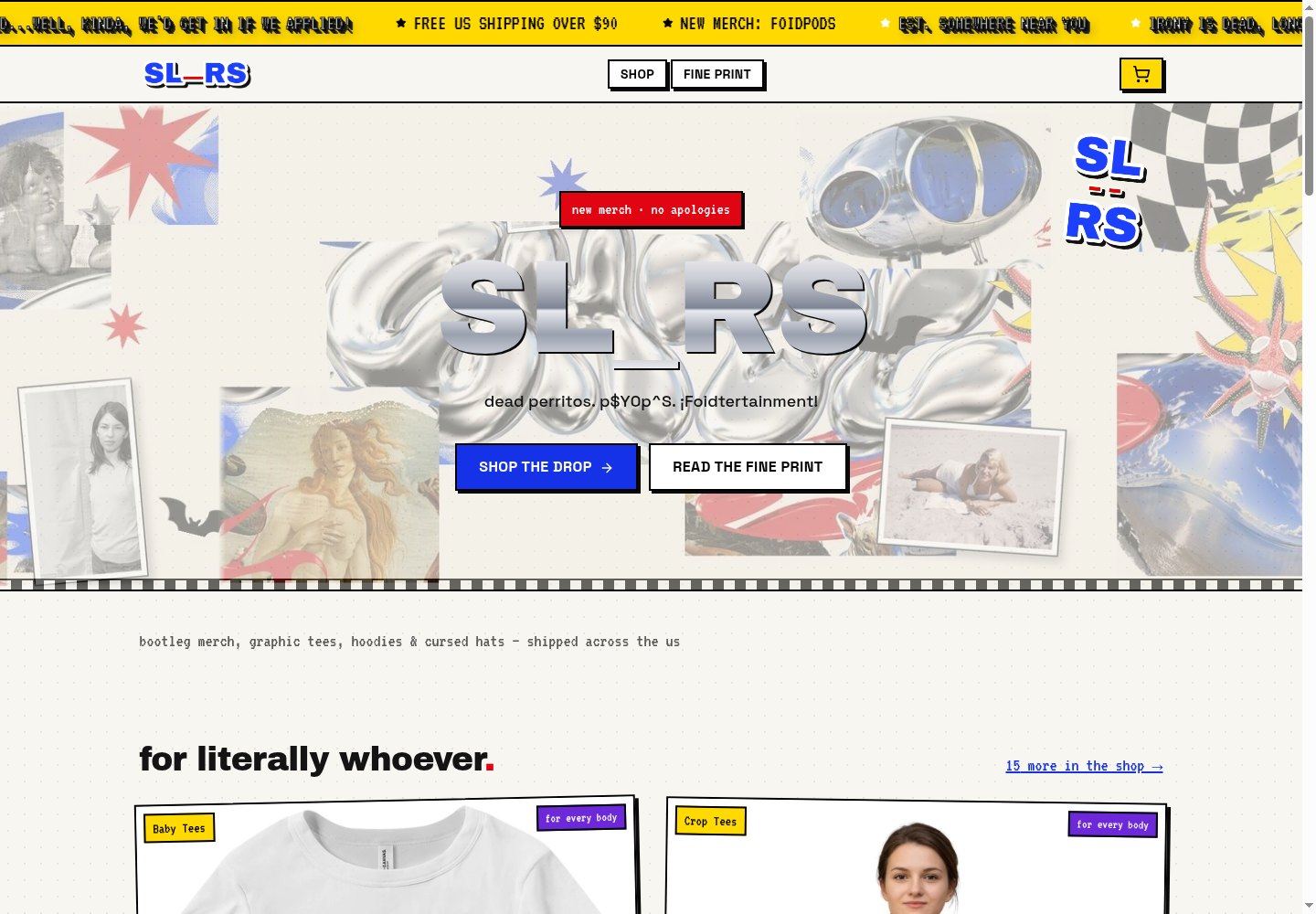
We don't sell ecommerce theory. SL_RS (our in-house apparel venture, live at sl-rs.com) runs the exact playbook we bring to clients: seventeen original design families across six garment types, a $30–$72 price ladder engineered so a third item tips the cart past the $90 free-shipping threshold, and a brand voice so specific that the site's design is part of the product.
The piece most stores can't replicate is the imaging pipeline. Instead of a photo shoot per product, design art is composited programmatically onto blank garment mockups, every design-family × garment × colorway combination gets a consistent, sellable image the same afternoon the art is finished. New designs go from file to fully merchandised product without a studio, which is why the catalog launched seventeen families deep instead of five.
03Catalog architecture is merchandising
How products are organized, named, and priced determines what sells. We structure catalogs around how buyers actually browse (design first, garment second, color third) with filters that work with thumbs on phones, because most DTC traffic arrives from social ads on small screens. Every product page carries its own social sharing meta, so when a customer pastes a link into a group chat. The preview does the marketing.
Pricing gets the same engineering treatment. The price ladder, shipping threshold, and bundle logic are set against a target average order value before a single page is designed. 'Free shipping over $90' is not a courtesy: it's an AOV mechanism that customers experience as generosity.
04Checkout, shipping, and the boring parts that decide revenue
Conversion dies in the boring parts: unexpected shipping costs, forced account creation, forms that fight autofill. Our builds treat checkout completion as the metric the whole site exists to serve: guest checkout by default, shipping logic stated plainly before the cart, and order flows tested on mid-range phones over cellular connections, not office fiber.
Behind the counter, we wire the store into the systems that run the business: order recording, inventory awareness, mailing list capture, and the analytics layer that tells you which designs, channels, and price points actually make money.
05Launch marketing is part of the build
A storefront without a launch plan is a store in the desert. Every ecommerce build includes the marketing runway: launch creative in the brand's voice, social-ad-ready landing pages, email capture before and after launch, and a ninety-day plan for the first drops. We run this on our own store before we recommend it to yours.